
I Almost Became Homeless Last Night
WRITTEN BY:
I almost became homeless last night.
Okay, technically, this statement is untrue. We are ragebaiting so you will read our post, but statistics show this is a looming reality for many, including you and me.
People have established a false reality for our standard of living. In America, we grow up hearing, “If you work hard, you will have a good life.” And as a black woman, I have also endured overly pragmatic exclamations of “You will have to be twice as good for a fraction of the respect”. Respect from whom is the question on my mind; either way, I will not claim that over myself, but I do recognize we are told we operate in a meritocracy.
This is not true.
Meritocracy is an American Dream, Not an American Reality
A meritocracy is a system where people get ahead based on their skills, talents, and hard work. Meritocracy is an American dream but not an American reality. We pretend to believe in meritocracy to justify having an opportunity. We also use merit to “prove” why we should deny another person something. How hard one works has little influence, in my opinion. Instead, it's capitalism that mostly influences us! This means that no matter our efforts, we must face the much stronger force of the haves and have-nots. Capitalism, rooted in inequality, has taken the forefront of global economic relations and is also exponentially impacting our lives.
Capitalism’s Design
Capitalism’s design is to strip us of our autonomy, devalue our worth as humans, and force us to choose between corporations and community.
Here are some of the ways we see this design
The country’s wealth and resources are hoarded by a select few. While a majority of the population face poverty and its long-stretching implications.
This, in turn, makes it difficult for us to control our time, effort, and money. Our lives are greatly determined by corporations and the money that can be extracted from people.
To regain a sense of control, we willingly devalue critical thinking, creativity, and education in exchange for the time, effort, and money we lose in everyday processes.
We also miss out on access to self-care. Experiences that can help us to feel healthy, happy, and fulfilled coincidentally take great effort to make happen.
When we dismiss these four facts in favor of using meritocracy to define our lives, we miss a big point. How do people who struggle with housing stability or are unhoused fit into the conversation?
Hardworking veterans can be seen on sidewalks holding signs.
Employed people with families struggle to secure homes.
I know talented artists who cannot pay their rent.
Do you see where I am going with this? Many of us are one financial crisis away from homelessness. Being homeless is not a personal failure; it's a systemic failure.
Before we can address the system that lets us all down by allowing some of us to be homeless, let us address the stigmas we so easily carry in our minds about people who are unhoused.
The Myths and Stigmas
“Lazy and asking for handouts”
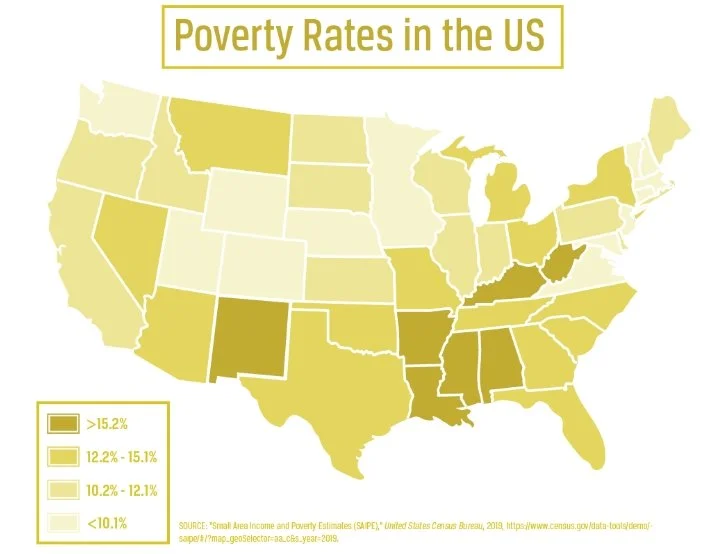
Poverty is a vicious cycle that demands great effort. Self- sufficiency is hard to achieve when resources are scarce or dispersed unequally. I choose to remember that as society undermines the importance of rest, the word lazy gets thrown around casually. There is no widespread program implemented to prevent homelessness. Struggling with housing is a symptom of our government's disregard. Not having a home, money, and other basic dignities takes hard work to navigate. This hard work is physically taxing because of criminalization. This means many laws disrupt homeless life and lead to punishments. It is mentally taxing because of a lack of stability and resources. Financially taxing because obtaining necessities can cause you to live beyond your means.
“I had to get it out the mud too”
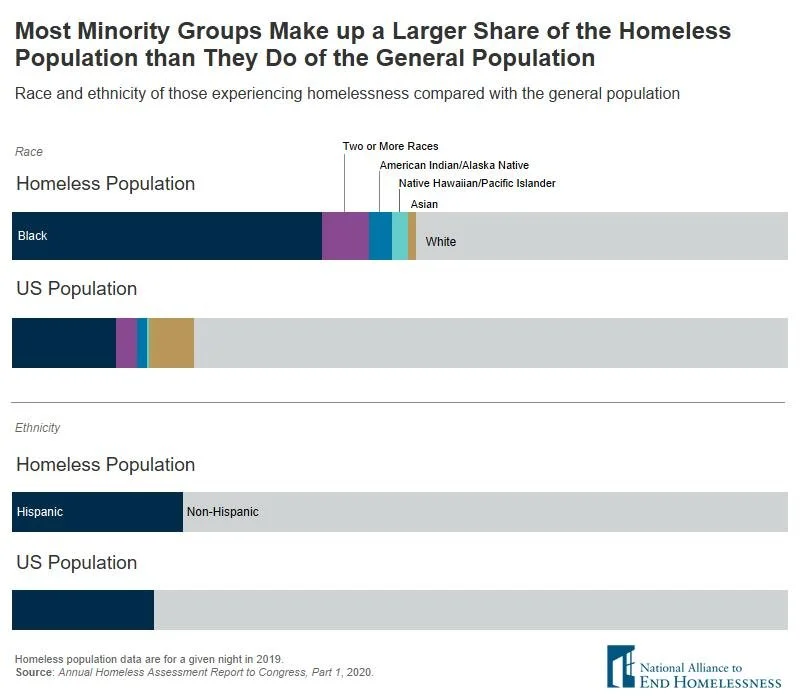
Cultural background, education, abilities, race, and gender may have given you leverage to experience resilience and recover from circumstances with less discomfort. However, comparing your struggles with those of others is insensitive and lacks the clarity of a full understanding. Your difficulties may not have led to homelessness and should not be dismissed either. It's important to make space and respect perspectives. Lived experiences are not a monolith.
“Bad with money”
Financial literacy and budgeting alone cannot prevent poverty, and “wisely” choosing to spend the little money someone has will not place them in stable housing (long-term). Consider your monthly income and all of the expenses it covers. Your housing may cover a significant portion. In addition, how many costs are associated with your housing? The basic needs you meet for yourself will be the same as someone on the street. But the less money someone has, the less quality experiences they can afford. Besides, if someone has to choose between staying alive and housing, I do not think anyone wants to pay for a home to die in.
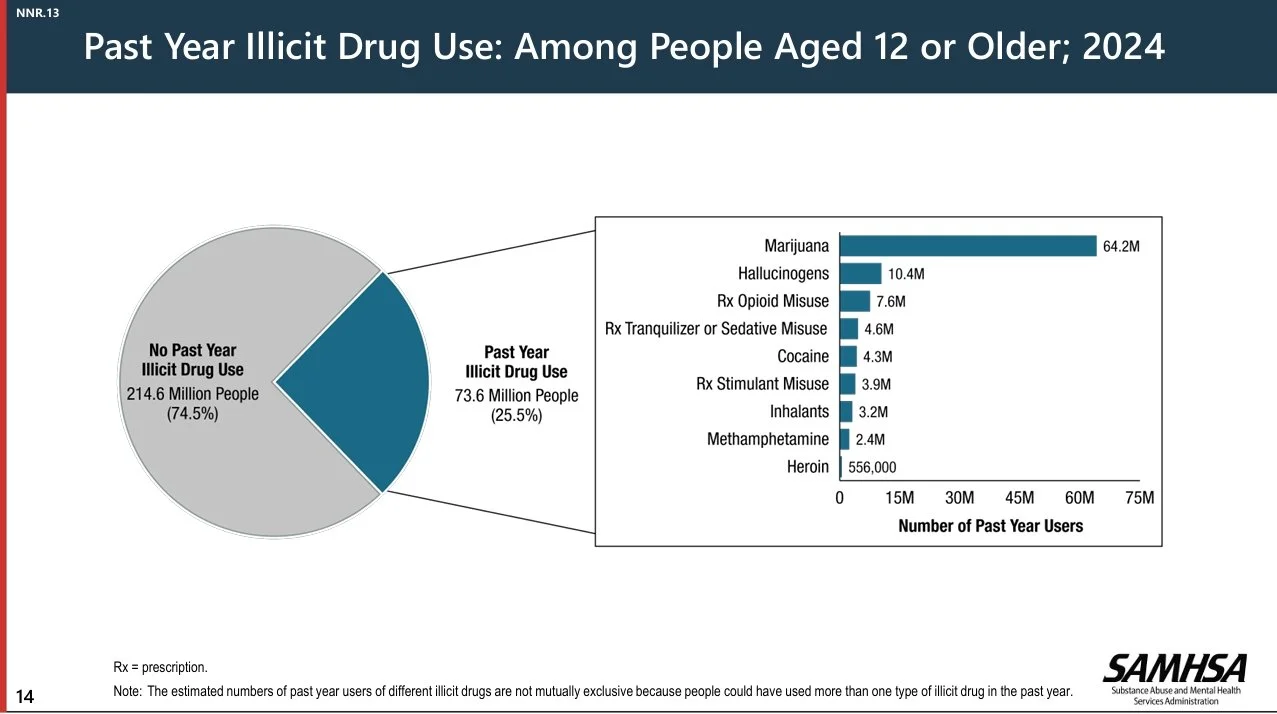
2024 National Survey on Drug Use and Health: Graphics to Support Estimates from the Annual National Report: Past Year Illicit Drug Use: Among People Aged 12 or Older ; 2024 p.14
“It's the drugs”
Many types of people use drugs. Children (people under the age of 18), professionals, creatives, and unemployed people use and abuse drugs in statistically high numbers. Some people use drugs recreationally, and some use them as coping mechanisms. Both uses can lead to addiction, a diagnosable illness that impacts every aspect of life. When self-care is inaccessible, people still desire to feel good, and that may manifest in drug and/or alcohol use.
Please Remember
Despite whatever stigma we use to try to justify such demeaning circumstances, we have to remember capitalism’s design works well enough to produce homelessness. And those in charge bank on our own struggles to force us to forget that, before anything else, we are discussing people. We must include all of the people in our community when discussing the betterment of the community.
When we are privileged enough to lay our heads in a safe place (consistently), we take something for granted. Like many Americans, last night and many other nights, we were close to homelessness, and there were not many efforts on our part that could have prevented it. The best things we can do are check our privilege and lend a helping hand instead of using harsh words.
It should not have to be you for you to care. But oh, how easily it could be you.